
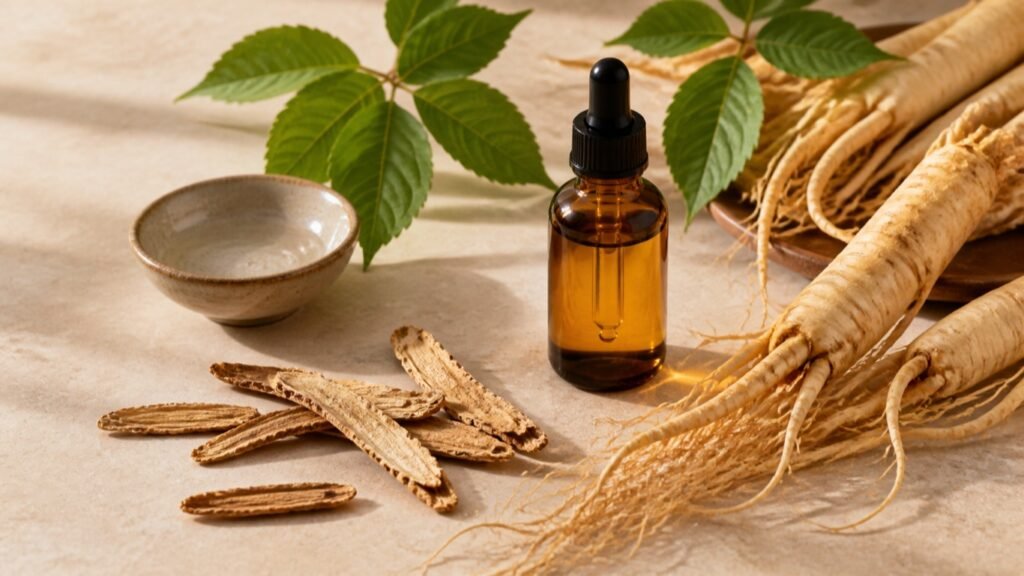
Ginseng oil benefits are often described online as if every bottle were the same and every claim were clinically proven. Neither is true. “Ginseng oil” may mean oil extracted from red ginseng, a carrier oil infused with ginseng extract, or a fragranced cosmetic that contains only a small amount of ginseng. That difference changes how the product should be used and what you can reasonably expect from it.
This practical guide explains how to read the label, what early research says about skin and hair use, how to patch-test a topical product, and which claims deserve caution. It focuses on cosmetic, external use—not on drinking ginseng oil or treating a medical condition.
Contents
- What ginseng oil actually is
- What the research can—and cannot—tell us
- Possible uses in a skin-care routine
- Possible uses for hair and scalp care
- How to choose a product
- How to patch-test and use it safely
- Frequently asked questions
1. What Is Ginseng Oil?
There is no single universal formula called ginseng oil. Two bottles with similar front labels can contain very different ingredients. Turn the bottle around and check the ingredient list before deciding how to use it.
Red ginseng oil
This usually refers to an oil fraction extracted from Panax ginseng roots. Its composition depends on the plant material and extraction method. A scientific review notes that red ginseng oil contains fatty acids and other oil-soluble compounds, but also stresses that promising experimental findings still require clinical verification.
Ginseng-infused carrier oil
A cosmetic manufacturer may add ginseng root extract to jojoba, sunflower, sesame or another carrier oil. In this case, much of the product’s feel and moisturising effect may come from the carrier oil. The label should identify both the carrier and the ginseng ingredient.
Essential oil or fragranced blend
Some sellers use “ginseng essential oil” as a marketing phrase, but the product may be a fragrance blend rather than a standardised extract from ginseng root. Fragrance can irritate sensitive skin. Do not assume that a strongly scented bottle is more authentic or effective.
2. What Does Research Say About Ginseng Oil Benefits?
Research on topical red ginseng oil is interesting but preliminary. Laboratory studies examine antioxidant activity, cell signalling and how particular formulations move through skin. An animal study reported hair-growth and ultraviolet-protection effects in mice. These results can help researchers decide what to test next, but they do not prove that a cosmetic oil will regrow human hair, reverse wrinkles or protect people from sun exposure.
The US National Center for Complementary and Integrative Health states that there is not enough reliable information to know whether topical Asian ginseng is safe and notes that products applied to skin may cause irritation or burning. This is why product instructions and a careful patch test matter.
3. Ginseng Oil in a Skin-Care Routine
If the finished formula suits your skin, it may work as an emollient: it can reduce the dry or tight feeling by helping soften the skin surface. That is a cosmetic effect and may be driven partly by the carrier oil. Claims that it “detoxifies,” permanently lightens skin, treats eczema, removes scars or reverses ageing go beyond the evidence.
- For dry-feeling skin: if the label permits facial use, apply the stated amount after a water-based moisturiser.
- For oily or acne-prone skin: choose a non-comedogenic finished product and introduce it slowly; oils are not automatically suitable for every acne routine.
- For sensitive skin: fragrance-free formulas with a short, transparent ingredient list are generally easier to assess.
- For an active rash or skin disease: ask a dermatologist instead of experimenting with a new botanical oil.
4. Ginseng Oil for Hair and Scalp
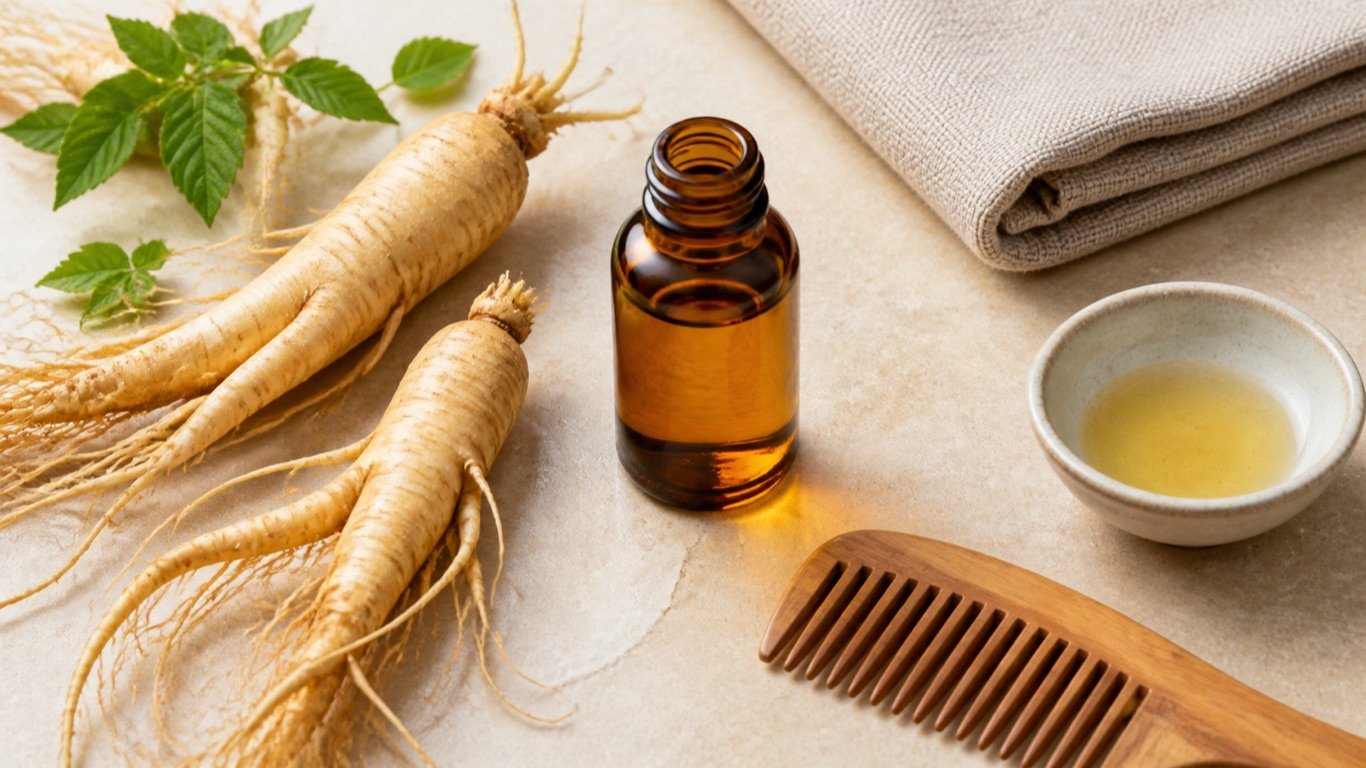
A cosmetic oil can add slip and shine to hair lengths and may reduce the dry feeling of a healthy scalp. The evidence does not yet show that topical ginseng oil reliably treats hair loss in people. If shedding is sudden, patchy, painful, associated with scale, or continues for several months, seek medical assessment because nutritional, hormonal, autoimmune and medication-related causes require different care.
- Follow the bottle’s scalp or hair directions; do not assume a facial oil is suitable for the scalp.
- Start with a small amount to avoid greasy build-up.
- Do not apply to scratched, inflamed or infected skin.
- Stop if you notice burning, itching, swelling, a rash or increased flaking.
5. Claims Ginseng Oil Does Not Prove
Topical ginseng oil should not be presented as a shortcut for whole-body benefits sometimes associated with orally consumed ginseng. Applying oil to the skin has not been shown to improve immunity, heart health, testosterone, erections, fertility, mental focus, sleep quality or athletic recovery. It must never be applied to the genitals or other mucous membranes.
If you are interested in consumable Korean red ginseng, treat it as a separate product category with different doses, contraindications and interaction concerns. Read our ground ginseng guide and red ginseng tea guide, then discuss regular use with a qualified health professional if you take medication.
6. How to Choose a Ginseng Oil Product
- Read the complete ingredient list. Look for the botanical name Panax ginseng, the carrier oil, fragrance and potential allergens.
- Check the intended use. The label should clearly state whether it is for the face, body, hair or scalp. “External use only” means it must not be swallowed.
- Prefer traceable information. A responsible seller provides the manufacturer, country of origin, batch or lot number, expiry or period-after-opening mark, and clear directions.
- Be cautious with percentage claims. “100% ginseng oil” is not meaningful unless the company explains the ingredient and extraction method.
- Avoid disease-treatment promises. A cosmetic should not promise to cure alopecia, eczema, sexual dysfunction or other medical conditions.
- Inspect the packaging. Dark, well-sealed packaging can help protect an oil from heat, light and oxidation.
7. How to Patch-Test and Use Ginseng Oil Safely
- Confirm that the product is designed for the body area you intend to use.
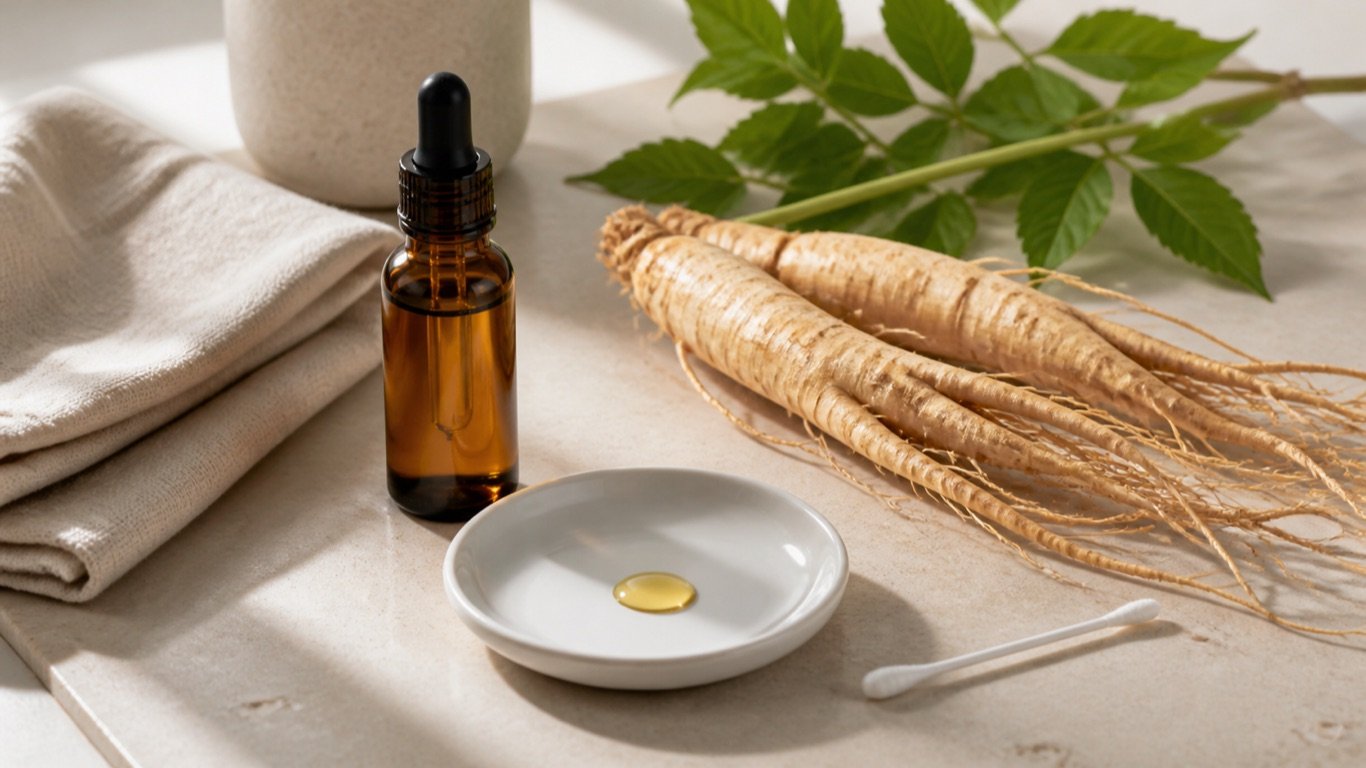
- Apply a small amount to a discreet patch of clean, intact skin, following the product’s directions.
- Leave the area alone and monitor it for delayed redness, itching, swelling or burning. Dermatology guidance often uses several days of repeat testing for cosmetics; a single short test cannot rule out every reaction.
- If there is no reaction, introduce it to a small area first rather than covering a large area immediately.
- Wash it off and stop using it if irritation occurs. Seek urgent help for facial swelling, breathing difficulty or a severe reaction.
Do not place the oil in the eyes, mouth, nose, genitals or on broken skin. Do not invent a universal dilution ratio: products vary widely, so follow the manufacturer’s instructions. Keep it away from children and store it as directed, usually tightly closed and away from heat and direct sunlight.
Ask a professional before use if:
- you are pregnant or breastfeeding;
- the product is intended for a child;
- you have eczema, psoriasis, severe acne, open wounds or known plant/fragrance allergies;
- you use prescription skin treatment or are preparing for a procedure;
- you plan to swallow any ginseng product or take medicines that may interact with oral ginseng.
8. Frequently Asked Questions
Is ginseng oil safe for the face?
It depends on the complete formula and your skin. Use only a product labelled for facial use, check for fragrance and allergens, and patch-test it first. Do not use it to treat a skin condition without professional advice.
Can ginseng oil regrow hair?
Human clinical evidence is not sufficient to call it a proven hair-regrowth treatment. Early laboratory and animal research is not the same as a clinical result in people.
Can I drink ginseng oil?
Do not swallow a product labelled for external or cosmetic use. An edible ginseng preparation is a separate formulation and may interact with medicines. Ask a clinician or pharmacist if you are considering oral use.
Does it improve sexual performance?
Topical ginseng oil has not been shown to treat erectile dysfunction, low libido or infertility, and it should not be applied to intimate tissues. For sexual-health concerns, use evidence-based medical advice.
How often should I use it?
Follow the specific product label. Start less frequently when introducing any new botanical cosmetic, and stop if your skin or scalp becomes irritated.
9. Bottom Line
Ginseng oil can be considered a cosmetic ingredient, not a universal treatment. Its real value depends on what is inside the bottle, how it is formulated, and whether your skin tolerates it. Choose a transparent label, use it only as directed, patch-test carefully, and keep expectations aligned with the limited human evidence.
Prefer established Korean red ginseng formats?
Explore clearly described products and compare their intended use before buying.
View Korean Red GinsengEvidence and Safety Sources
- US National Center for Complementary and Integrative Health: Asian ginseng safety and interactions
- Red ginseng oil: a comprehensive scientific review
- Animal research on red ginseng oil, hair growth and UV exposure
This article is for general education and is not medical advice. The evidence for topical ginseng oil remains limited, and product formulas vary.