Chili pepper oil and capsaicin-rich herbal infusions have garnered significant interest among individuals seeking natural, science-backed methods to optimize intimacy, stamina, and circulatory wellness. When utilized properly, chili pepper oil acts as a potent bioactive agent that stimulates vascular responsiveness, enhances peripheral nitric oxide synthesis, and creates a pleasant sensory warming sensation. However, harnessing these physiological benefits safely requires a deep understanding of proper dilution, anatomical boundaries, culinary incorporation, and holistic lifestyle practices.
Table of Contents
- 1. How Chili Pepper Oil Works: Biological & Vascular Mechanisms
- 2. Safe Application Methods: Topical Massage vs. Culinary Integration
- 3. Timeline of Effects: What to Expect & When
- 4. Crucial Safety Precautions, Dilution Ratios & Contraindications
- 5. Comprehensive Program: Combining Capsaicin with Exercise & Adaptogens
- 6. Frequently Asked Questions (FAQ)
- 7. Scientific References & Clinical Studies
1. How Chili Pepper Oil Works: Biological & Vascular Mechanisms
The primary bioactive compound in chili peppers (genus Capsicum) is capsaicin (8-methyl-N-vanillyl-6-nonenamide), along with related capsaicinoids including dihydrocapsaicin and nordihydrocapsaicin. When capsaicin contacts sensory nerve endings in the skin or digestive tract, it binds selectively to the Transient Receptor Potential Vanilloid 1 (TRPV1) receptor ion channel. This receptor is responsible for sensing heat and modulating vascular tone.
Activation of TRPV1 initiates a cascade of beneficial physiological responses that directly and indirectly support sexual vitality:
- Endothelial Nitric Oxide Synthase (eNOS) Activation: Capsaicin stimulation triggers calcium influx in endothelial cells, upregulating eNOS and accelerating the conversion of L-arginine into nitric oxide (NO). Nitric oxide diffuses into smooth muscle cells, elevating cyclic guanosine monophosphate (cGMP) and promoting microvascular vasodilation.
- Sensory Neuropeptide Release: Mild activation of cutaneous TRPV1 receptors stimulates the localized release of Substance P and Calcitonin Gene-Related Peptide (CGRP). These powerful neuropeptides expand local capillaries, delivering a gentle, pleasant sensation of internal warmth and heightened tactile sensitivity.
- Endorphin & Dopamine Surge: The subtle thermal stimulation induced by capsaicin signals the central nervous system to release beta-endorphins and neurotransmitters that alleviate mental stress, elevate mood, and foster physiological intimacy.
- Thermogenic & Metabolic Enhancement: Ingested chili oil increases resting energy expenditure and brown adipose tissue activity, optimizing metabolic efficiency and cardiovascular stamina.
2. Safe Application Methods: Topical Massage vs. Culinary Integration
Chili pepper oil can be utilized through two distinct pathways: external sensory massage and dietary incorporation. Both avenues offer unique benefits, provided strict safety guidelines are observed.
A. Diluted Topical Sensory Massage (External Body Application Only)
Topical application of capsaicin-infused oil should be restricted to general muscular and reflexology areas, such as the lower back, inner thighs, calves, and soles of the feet. This promotes pelvic circulation through somatic reflex arcs without risking mucosal irritation.
- The 0.1%–0.5% Dilution Rule: Pure capsaicin extract or concentrated chili essential oil must NEVER be applied directly to the skin. It must be diluted into a gentle carrier oil, such as cold-pressed sweet almond oil, golden jojoba oil, or fractionated coconut oil. A safe ratio is 1 to 2 drops of mild chili oil per 30 ml (1 fluid ounce) of carrier oil.
- Sensory Warming Massage: Warm 3–5 drops of the diluted mixture between your palms and gently massage the lower lumbar region and gluteal muscles. The gentle warmth relaxes constricted muscular bands, relieving pelvic tension and promoting healthy blood flow toward lower pelvic organs.
- Strict Anatomical Boundary: Never apply chili pepper oil, even in diluted form, directly onto mucous membranes, the genitals, scrotum, labia, or broken skin.
B. Culinary Incorporation & Dietary Infusions
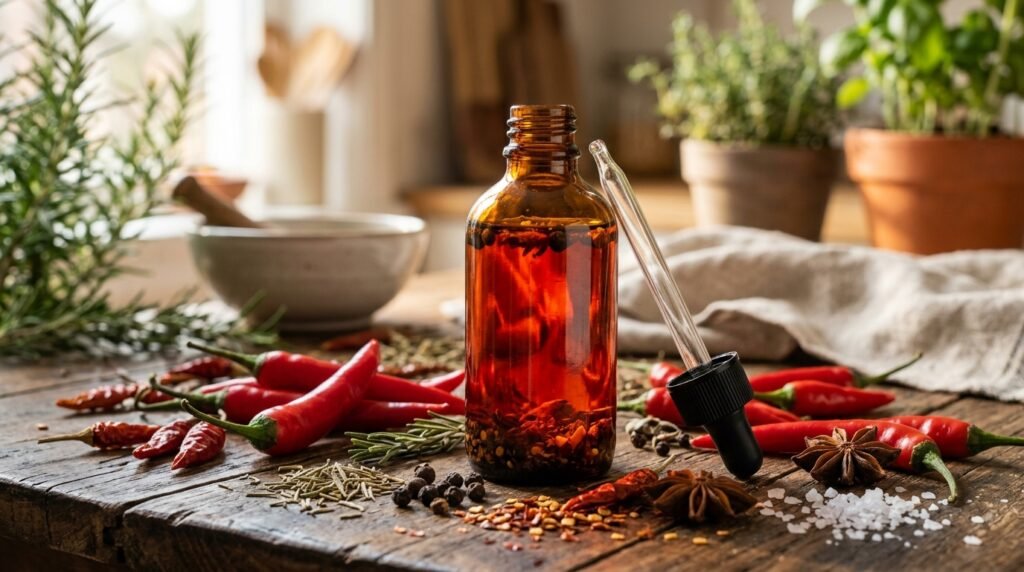
Consuming high-quality, culinary-grade chili infused extra virgin olive oil provides systemic cardiovascular advantages without the risk of topical contact irritation:
- Drizzle Over Nutrient-Dense Meals: Add 1 teaspoon of chili infused olive oil over fresh salads, steamed broccoli, wild-caught salmon, or whole-grain dishes. Combining capsaicin with healthy dietary fats improves the bioavailability of both the capsaicinoids and fat-soluble vitamins (A, D, E, and K).
- Pre-Workout or Midday Metabolic Boost: Incorporating moderate spicy oil into lunch enhances postprandial thermogenesis, maintaining steady alertness and physical vigor into the evening.
3. Timeline of Effects: What to Expect & When
Understanding the physiological timeline of chili pepper oil helps establish realistic expectations and optimizes your wellness regimen:
- Immediate (15 to 45 Minutes): Mild cutaneous warming occurs when applied topically as a diluted massage oil. When ingested culinarily, a slight boost in heart rate, thermogenesis, and sensory alertness is felt, accompanied by the release of endorphins.
- Short-Term (1 to 2 Weeks): Regular dietary intake of capsaicinoids supports improved post-meal arterial elasticity and stabilizes blood flow. Consistent back and leg massage helps ease chronic muscular tension around the pelvic girdle.
- Long-Term (4 to 8 Weeks and Beyond): When integrated into an active lifestyle featuring balanced nutrition, adequate sleep, and proven adaptogens, users report superior physical stamina, enhanced subjective vitality, and robust cardiovascular responsiveness.
4. Crucial Safety Precautions, Dilution Ratios & Contraindications
While capsaicin is a naturally occurring botanical compound, its high potency requires meticulous handling. Adhere strictly to the following precautions:
- Mandatory 24-Hour Patch Test: Before applying any diluted chili oil blend, apply a tiny drop (diluted at 0.1%) to the inside of your forearm. Wait 24 hours. If excessive erythema, burning, itching, or blistering develops, wash thoroughly and discontinue use.
- Hand Hygiene: Always wash hands thoroughly with warm water and soap immediately after handling chili oil. Never touch your eyes, nose, or sensitive body areas with unwashed hands.
- Emergency Soothing Protocol: If accidental skin irritation occurs, water alone will not wash capsaicin away because capsaicin is lipophilic (fat-soluble). Instead, apply cold whole milk, yogurt, or pure coconut/olive oil to dissolve the capsaicin, then wash with mild soapy water.
- Contraindications: Individuals with active skin conditions (eczema, psoriasis, contact dermatitis), severe gastroesophageal reflux disease (GERD), active peptic ulcers, or those taking anticoagulant medications should consult their physician before using concentrated capsaicin products.
5. Comprehensive Program: Combining Capsaicin with Exercise & Adaptogens
To achieve enduring sexual wellness and physical performance, chili pepper oil should serve as one component of a holistic, multi-pillar lifestyle:
- Cardiovascular Aerobic Training: Engage in 150 minutes of moderate-intensity exercise weekly (brisk walking, cycling, swimming) to build robust heart-lung capacity and optimize baseline nitric oxide output.
- Pelvic Floor Strengthening (Kegels): Consistent pelvic muscle exercises reinforce blood retention in pelvic structures and enhance neuromuscular control.
- Optimal Hydration & Sleep: Consume at least 2.5–3 liters of water daily and secure 7–8 hours of restful sleep to ensure healthy nightly testosterone synthesis and cellular recovery.
- Standardized Herbal Adaptogens: Pair culinary chili infusions with standardized herbs like Korean Red Ginseng and Tongkat Ali to support endocrine balance, reduce cortisol, and maintain sustained stamina.
6. Frequently Asked Questions (FAQ)
Q1: Can I apply chili pepper oil directly to the genitals for faster erection or arousal?
No, absolutely not. Direct application of capsaicin or chili pepper oil to mucous membranes, the penis, scrotum, or vulva will cause severe, agonizing burning sensations, chemical irritation, and potential tissue damage. Diluted chili oil should only be used on non-mucosal areas such as the lower back and inner thighs for sensory massage.
Q2: What is the safest carrier oil for diluting chili pepper oil?
Cold-pressed sweet almond oil, jojoba oil, and fractionated coconut oil (MCT) are ideal carrier oils. They have high skin tolerance, neutral scents, and excellent emollient properties that temper capsaicin’s potency while ensuring smooth glide during massage.
Q3: Does eating spicy chili oil provide the same sexual benefits as topical application?
Yes, and in fact, culinary intake provides superior systemic benefits. Ingested capsaicin stimulates TRPV1 receptors throughout the gastrointestinal tract, promoting systemic endothelial nitric oxide release, whole-body circulation, and metabolic thermogenesis without any risk of skin irritation.
Q4: How does capsaicin influence testosterone levels?
Preclinical studies indicate that capsaicin can stimulate testicular blood flow and upregulate steroidogenic acute regulatory (StAR) protein expression, supporting optimal Leydig cell function. When combined with regular resistance exercise and adaptogens like Tongkat Ali, it creates a favorable hormonal environment.
Q5: What should I do if chili oil gets into my eyes or sensitive skin?
Do not use water alone, as water spreads capsaicin. For skin, saturate the area with whole milk, vegetable oil, or yogurt to bind the lipophilic capsaicin molecules, then wash with gentle soap. For eyes, flush thoroughly with sterile saline solution and seek medical attention if irritation persists.
Q6: Can women use chili pepper oil for sensory wellness?
Yes. Women can benefit from culinary chili oil for enhanced energy and circulation, as well as diluted lower back massage to relieve pelvic muscular tension and induce pleasant sensory warmth. The same strict rule applies: never apply near vaginal or vulvar mucous membranes.
Q7: Can chili pepper oil cure erectile dysfunction (ED)?
Chili pepper oil is a supportive wellness aid that enhances microcirculation, but it is not a cure for clinical erectile dysfunction caused by severe arterial atherosclerosis, diabetic neuropathy, or low testosterone. Consult a healthcare provider for comprehensive medical diagnosis and management.
Q8: How often can I use diluted chili oil for massage?
Using a properly diluted (0.1%) blend 1 to 2 times per week for back and thigh massage is generally safe and well-tolerated. Avoid daily topical application to prevent cutaneous hypersensitivity or excessive desensitization of TRPV1 receptors.
Q9: Does cooking degrade the capsaicin in chili oil?
Capsaicin is a relatively heat-stable compound and does not easily degrade under moderate cooking temperatures. However, gentle cold infusion or low-heat simmering preserves beneficial polyphenols, vitamin E, and volatile aromatics in the carrier olive oil.
Q10: What natural supplements synergize best with chili pepper oil?
Botanical adaptogens that enhance vascular and hormonal vitality offer the best synergy. Standardized Korean Red Ginseng (for nitric oxide and stamina) and Tongkat Ali (for testosterone optimization and physical drive) provide systemic backing to capsaicin’s acute circulatory effects.
7. Scientific References & Clinical Studies
- Frontiers in Pharmacology (2021): Mechanisms of Capsaicin-Mediated Vasodilation and Endothelial Nitric Oxide Synthase Activation via TRPV1 Channels. PMID: 33854432.
- Journal of Ginseng Research (2020): Panax ginseng and Vascular Health: Synergistic Effects of Ginsenosides and Nitric Oxide Pathways on Erectile Function. PMID: 32256157.
- Nutrients (2019): Dietary Capsaicinoids, Vascular Function, and Metabolic Health: A Comprehensive Review. PMID: 31108898.
- Phytotherapy Research (2021): Eurycoma longifolia (Tongkat Ali) and Panax ginseng: Evidence-Based Herbal Therapeutics for Male Sexual Function and Vitality. PMID: 33544312.
- British Journal of Pharmacology (2018): TRPV1 Receptor Pharmacology in Cutaneous Sensation, Thermoregulation, and Microvascular Perfusion. PMID: 29729014.