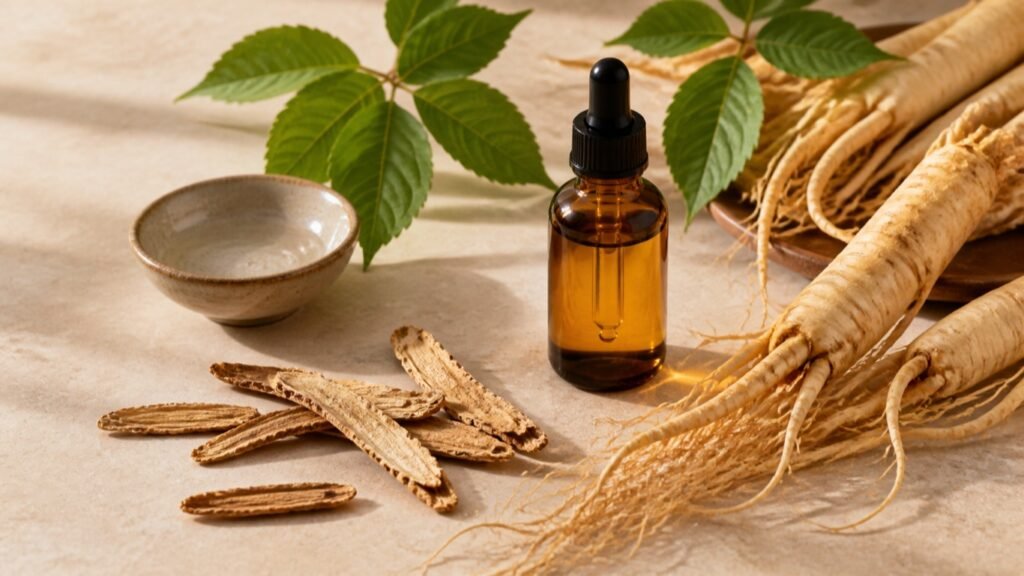
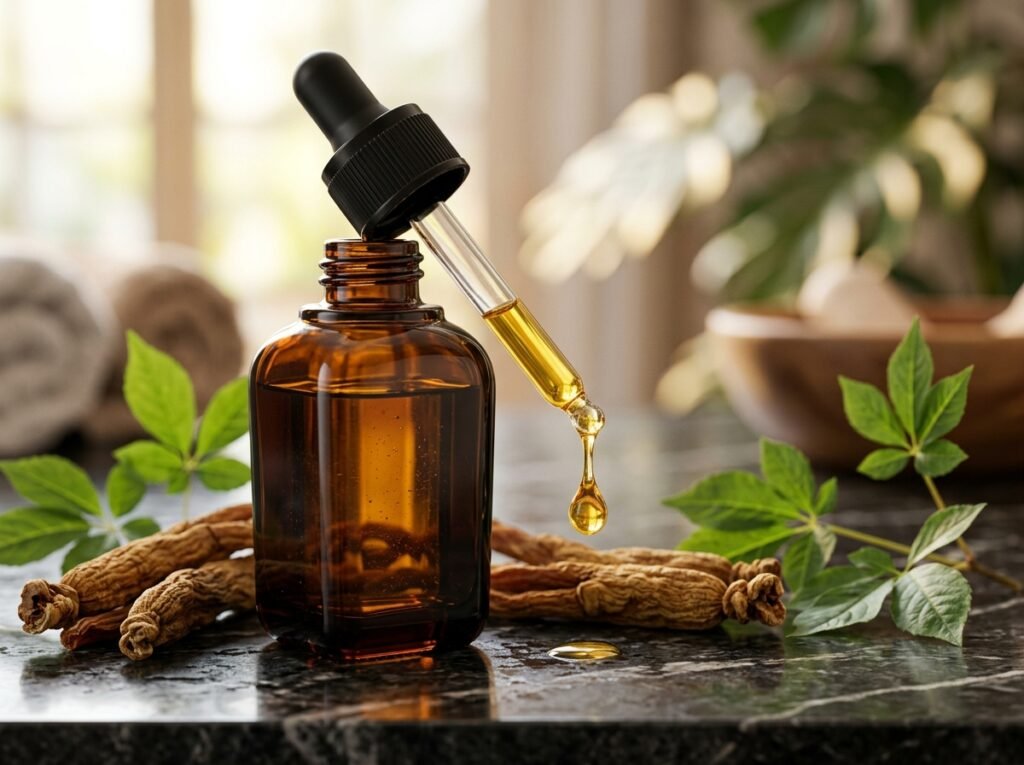
Ginseng (Panax ginseng) is far more than a passing cosmetic trend; it is one of the most thoroughly researched botanical adaptogens in modern dermatological science. Packed with unique bioactive triterpene saponins known as ginsenosides, alongside potent phenolic compounds, polysaccharides, and peptides, Korean red ginseng delivers profound anti-aging, firming, brightening, and microcirculatory benefits to the skin matrix.
Whether applied topically through concentrated serums and creams or consumed internally as a standardized botanical extract, ginseng acts as a cellular powerhouse that addresses the root physiological drivers of skin aging: collagen depletion, oxidative stress, matrix metalloproteinase (MMP) breakdown, sluggish microcirculation, and compromised moisture barrier function.
Key Dermatological Takeaways
- Collagen Synthesis Stimulation: Ginsenosides (notably Rb1, Rg1, and Rg3) activate dermal fibroblasts to upregulate Type I procollagen production and inhibit matrix metalloproteinase-1 (MMP-1), reducing fine lines and wrinkle depth (PMID: 28410582).
- Microcirculation & Natural Radiance: Enhances nitric oxide (NO) endothelial release in cutaneous microcapillaries, flushing dull complexions with vital oxygen and nutrients.
- Hyperpigmentation & Tone Evening: Regulates tyrosinase enzymatic pathways to suppress excessive melanin synthesis, fading age spots and post-inflammatory erythema (PMID: 30105315).
- Dual-Action Synergy: Combining topical botanical serums with oral adaptogenic supplementation yields optimal epidermal density and systemic oxidative defense.
Table of Contents
- The Biochemistry of Ginseng in Dermatology: How Bioactive Compounds Rejuvenate Skin
- Top Evidence-Based Skin Benefits of Korean Red Ginseng
- Collagen Production & Wrinkle Reduction
- Enhanced Microcirculation & Instant Glow
- Pigmentation Suppression & Complexion Brightening
- Sebum Regulation & Acne-Prone Skin Balance
- Skin Barrier Repair & Trans-Epidermal Water Loss (TEWL) Reduction
- Soothing Chronic Low-Grade Inflammation & Sensitive Skin
- Types of Ginseng for Skin Care: Choosing the Right Botanical Profile
- Synergistic Skincare Pairings: Combining Ginseng with Active Ingredients
- Practical Step-by-Step Skincare Routines (Morning & Evening)
- Topical Application vs. Oral Supplementation: The Dual-Action Strategy
- Safety Profile, Patch Testing & Contraindications
- Frequently Asked Questions (FAQ)
The Biochemistry of Ginseng in Dermatology: How Bioactive Compounds Rejuvenate Skin
To appreciate why ginseng holds an elite status in luxury and clinical skincare formulations across Korea, Japan, and the Western dermatological landscape, we must examine its distinct molecular architecture. Unlike generic plant oils that merely provide occlusive barrier lipids, Panax ginseng contains a specialized cluster of triterpene saponins called ginsenosides that act as cellular modulators.
1. Bioactive Ginsenosides (Rb1, Rg1, Rg3, and Rh2)
Modern extraction technologies have isolated over 40 distinct ginsenosides, each exerting targeted biological actions within the cutaneous layers:
- Ginsenoside Rg3: Demonstrates remarkable photoprotective properties. In clinical photobiology, Rg3 inhibits ultraviolet B (UVB)-induced degradation of the extracellular matrix by preventing the overexpression of matrix metalloproteinases (MMP-1 and MMP-3).
- Ginsenoside Rb1: A primary driver of dermal fibroblast proliferation. Studies show Rb1 significantly accelerates wound healing, enhances skin thickness, and stimulates hyaluronic acid synthase-2 (HAS2) gene expression in keratinocytes.
- Ginsenoside Rg1: Powerful antioxidant and anti-senescence molecule. Rg1 prevents premature telomere shortening in dermal stem cells, protecting skin architecture against atmospheric particulate pollution and blue light oxidative stress.
- Compound K (Bio-transformed Ginsenoside): A rare, highly bioavailable metabolite generated through fermentation that exhibits superior transepidermal permeability, rapidly restoring lipid barrier integrity and reducing erythema.
2. Potent Polyphenols and Flavonoids
Beyond saponins, red ginseng roots are abundant in ferulic acid, maltol, caffeic acid, and specialized acidic polysaccharides. These phytochemicals serve as potent free-radical scavengers, neutralizing reactive oxygen species (ROS) before they can peroxidize epidermal lipids or damage cellular DNA.
3. Microcirculatory Endothelial Activation
Skin pallor, sallow undertones, and persistent morning puffiness are direct reflections of compromised capillary microcirculation. Ginseng promotes the intracellular activation of endothelial nitric oxide synthase (eNOS), increasing basal blood flow to the papillary dermis. This influx delivers essential amino acids, minerals, and oxygen while accelerating metabolic waste clearance from lymphatic networks.
Top Evidence-Based Skin Benefits of Korean Red Ginseng
1. Collagen Production & Wrinkle Reduction
As the human body ages, endogenous collagen production declines by approximately 1% per year past the age of 25. Environmental stressors, especially ultraviolet radiation (photoaging) and glycation, accelerate this breakdown. Ginseng acts as a biostimulant:
- Fibroblast Activation: Ginsenosides bind to specific nuclear receptors in dermal fibroblasts, upregulating transcription factors responsible for producing Type I and Type III procollagen.
- MMP Inhibition: Clinical research published in the Journal of Ginseng Research confirms that red ginseng extract reduces the enzymatic expression of collagenase and elastase, slowing down the structural sagging of facial contours and smoothing periorbital fine lines.
2. Enhanced Microcirculation & Instant Glow
Dull, fatigued skin often stems from sluggish peripheral circulation and cellular hypoxia. By dilating microcapillaries in the subpapillary plexus, topical ginseng gives the skin an immediate energized, rosy, and vibrant tone. This natural flush is not superficial irritation, but rather authentic oxygenation that improves the performance of subsequent skincare steps.
3. Pigmentation Suppression & Complexion Brightening
Melanocytes produce excess melanin in response to UV exposure, hormonal fluctuations (melasma), and localized inflammation. Red ginseng inhibits tyrosinase, the rate-limiting enzyme in melanogenesis. Furthermore, it prevents the transfer of melanosomes from melanocytes to surrounding keratinocytes, gradually lightening stubborn hyperpigmentation, sun spots, and post-blemish marks without causing harsh peeling or photosensitivity associated with synthetic bleaching agents.
4. Sebum Regulation & Acne-Prone Skin Balance
While often celebrated as an anti-aging hero, ginseng is equally effective for oily, combination, and acne-prone skin profiles. Its adaptogenic properties regulate 5-alpha reductase activity within sebaceous glands, curbing excess sebum production during periods of hormonal or environmental stress. Additionally, its natural antimicrobial properties inhibit Cutibacterium acnes proliferation while reducing inflammatory swelling around active breakouts.
5. Skin Barrier Repair & Trans-Epidermal Water Loss (TEWL) Reduction
A compromised moisture barrier manifests as chronic tightness, flaking, redness, and reactive stinging. Ginseng stimulates the biosynthesis of ceramides, cholesterol, and free fatty acids within the stratum corneum. In clinical evaluations, individuals applying fermented ginseng extract demonstrated a significant decrease in Trans-Epidermal Water Loss (TEWL) over 4 weeks, with marked improvements in dermal moisture retention.
6. Soothing Chronic Low-Grade Inflammation & Sensitive Skin
Subclinical, chronic inflammation—often termed “inflammaging”—is a primary driver of accelerated aging. Ginseng downregulates pro-inflammatory cytokines such as TNF-alpha, IL-1beta, and IL-6, providing deep relief for individuals dealing with mild rosacea, urban pollution stress, or reactive sensitivity caused by aggressive exfoliation.
Experience Premium Korean Red Ginseng Vitality
Achieving a radiant, resilient complexion starts with pure botanical excellence. Nourish your skin and body from the inside out with 100% authentic, standardized 6-year-grown Korean Red Ginseng.
Types of Ginseng for Skin Care: Choosing the Right Botanical Profile
Not all ginseng extracts are created equal. Understanding the processing methods and plant species allows you to select products tailored to your exact dermatological objectives:
| Ginseng Variety | Processing Method | Primary Active Compounds | Best For |
|---|---|---|---|
| Korean Red Ginseng (Panax ginseng) | Steamed & sun-dried (6-year roots) | Ginsenosides Rg3, Rh2, Rb1 | Intensive anti-aging, firming, deep wrinkle reduction |
| Fermented Red Ginseng | Microbial enzymatic fermentation | Compound K, low molecular ginsenosides | Rapid barrier repair, ultra-deep penetration, sensitive skin |
| White Ginseng | Air-dried without steam processing | Ginsenosides Rb1, Rg1 | Light brightening, daytime hydration, oil control |
| American Ginseng (Panax quinquefolius) | Air-dried native North American root | High Rb1 to Rg1 ratio | Soothing irritated skin, calming heat and redness |
Synergistic Skincare Pairings: Combining Ginseng with Active Ingredients
One of ginseng’s greatest strengths is its exceptional stability and biocompatibility with other popular dermatological actives. When formulating a comprehensive regimen, consider these proven pairings:
- Ginseng + Hyaluronic Acid: A hydration powerhouse. While low and medium molecular weight hyaluronic acid draws water into the extracellular matrix, ginseng reinforces the lipid barrier to lock in moisture, preventing trans-epidermal evaporation.
- Ginseng + Niacinamide (Vitamin B3): The ultimate tone-evening duo. Niacinamide strengthens barrier proteins and inhibits melanosome transfer, while ginseng downregulates tyrosinase activity and boosts microcapillary blood flow, producing exceptional skin clarity.
- Ginseng + Vitamin C (L-Ascorbic Acid or Ascorbyl Glucoside): Multi-layer antioxidant shielding. Vitamin C protects the aqueous cellular compartments and stimulates collagen enzymatic cross-linking, while red ginseng polyphenols recycle oxidized vitamin C molecules, extending their active lifespan.
- Ginseng + Retinol / Retinaldehyde: Retinoids drive cellular turnover but often trigger peeling and irritation. Ginseng mitigates retinoid-induced inflammation by suppressing inflammatory prostaglandins while synergistically amplifying collagen synthesis.
- Ginseng + Peptides (Matrixyl 3000, Copper Tripeptide-1): Structural reconstruction. Peptides signal cellular repair, while ginsenosides provide the energetic and circulatory substrate needed for rapid tissue regeneration.
Practical Step-by-Step Skincare Routines (Morning & Evening)
Morning Protocol: Environmental Defense & Radiance (AM)
- Gentle Cleanser: Cleanse with a low-pH, sulfate-free foaming or gel cleanser to remove nighttime sebum without stripping lipids.
- Ginseng Hydrating Essence / Toner: Pat a watery ginseng essence onto slightly damp skin to prep the stratum corneum and initiate microcirculation.
- Antioxidant Serum: Apply a concentrated Korean red ginseng serum or a combination serum featuring Ginseng + 5% Niacinamide or Vitamin C.
- Lightweight Emulsion or Gel-Cream: Lock in hydration with a ceramide-infused daily moisturizer.
- Broad-Spectrum Sunscreen (SPF 50+ PA++++): Essential step. Ginseng enhances skin resilience, but UV radiation destroys collagen without robust photoprotection.
Evening Protocol: Cellular Repair & Barrier Restoration (PM)
- Double Cleanse: Remove makeup and sunscreen with a cleansing oil/balm, followed by a gentle water-based cleanser.
- Ginseng Fermented Essence: Apply 2–3 layers of fermented ginseng toner for deep moisture saturation.
- Targeted Treatment: Apply your active serum (Ginseng + Retinol or Ginseng Anti-Aging Ampoule). Allow 3–5 minutes for full absorption.
- Ginseng Eye Cream: Gently dab a rich ginseng-infused eye cream around the orbital bone to target dark circles, under-eye puffiness, and crow’s feet.
- Rich Nourishing Night Cream: Seal with a barrier-restoring cream containing Ginseng root extract, squalane, and cholesterol.
Topical Application vs. Oral Supplementation: The Dual-Action Strategy

Dermatologists and holistic wellness practitioners increasingly emphasize the “Inside-Out” approach to dermatological health. Here is how oral and topical ginseng work in concert:
- Topical Route (Direct & Localized): Delivers high local concentrations of ginsenosides, polysaccharides, and antioxidants directly to the epidermis and upper dermis. Best for targeting surface texture, dark spots, localized wrinkles, and immediate hydration.
- Oral Route (Systemic & Deep-Tissue): Standardized Korean red ginseng extract (liquid extract, tea, or capsules) works through the bloodstream to enhance systemic microcirculation, modulate adrenal cortisol output (stress-induced breakouts), regulate blood glucose levels (preventing collagen glycation), and deliver antioxidant defense to deep subcutaneous layers.
Clinical Recommendation: For individuals over 30 experiencing early signs of skin laxity, chronic fatigue-induced dullness, or stubborn hyperpigmentation, combining a daily morning dose of standardized Korean red ginseng with a topical evening serum delivers visibly superior results compared to topical application alone.
Safety Profile, Patch Testing & Contraindications
Topical Panax ginseng is classified as safe, non-irritating, and suitable for all skin types, including sensitive skin. However, to ensure optimal results, follow these safety practices:
- Patch Test: When introducing a new high-potency ginseng serum, apply a nickel-sized amount to the inner forearm or behind the ear for 24–48 hours to rule out rare botanical allergies.
- Formulation Purity: Check the ingredient list. Ensure that Panax Ginseng Root Extract or Red Ginseng Water appears among the top five ingredients, rather than near the bottom as a marketing additive.
- Oral Consumption Precautions: While oral red ginseng is exceptionally safe, individuals with uncontrolled hypertension, bleeding disorders, or those taking blood-thinning medications (warfarin, aspirin) should consult their physician before starting high-dose oral supplementation.
Frequently Asked Questions (FAQ)
1. How long does it take to see visible skin results from ginseng?
Immediate improvements in hydration, suppleness, and healthy circulation are noticeable within 24 to 48 hours of using a high-quality ginseng essence or serum. For structural improvements—such as collagen synthesis, wrinkle depth reduction, and lightening of stubborn dark spots—clinical trials demonstrate significant, measurable results after 4 to 8 weeks of consistent, twice-daily application.
2. Can ginseng cause skin purging or breakouts?
Pure ginseng extract does not increase cellular turnover at the follicular pore level in the way that strong retinoids or chemical exfoliants (AHA/BHA) do; therefore, it does not trigger traditional “purging.” If you experience breakouts after starting a ginseng cosmetic product, the culprit is typically heavy occlusive base ingredients (e.g., comedogenic waxes, mineral oils, or synthetic fragrances) rather than the ginseng extract itself.
3. Is Korean red ginseng safe for sensitive or rosacea-prone skin?
Yes. Korean red ginseng contains potent anti-inflammatory ginsenosides (such as Rg3 and Rh2) that downregulate inflammatory cytokine cascades (TNF-alpha, IL-6). For reactive or rosacea-prone skin, fermented red ginseng serums are particularly beneficial because the fermentation process breaks down molecules into smaller, hypoallergenic structures that calm vascular redness without irritation.
4. Can I use ginseng serum alongside Vitamin C and Niacinamide?
Absolutely. Ginseng works in powerful synergy with both Vitamin C and Niacinamide. It stabilizes Vitamin C and enhances its photoprotective antioxidant capacity, while complementing Niacinamide’s barrier-strengthening and lipid-balancing effects. Layer lightweight aqueous Vitamin C or Niacinamide first, followed by your ginseng serum.
5. Does drinking ginseng tea provide the same skin benefits as applying a serum?
Drinking ginseng tea or consuming red ginseng extract provides systemic antioxidant protection, regulates cortisol, and enhances blood flow throughout the capillary network from the inside out. However, to target surface fine lines, uneven skin texture, and localized sun spots directly, topical application delivers a much higher local concentration of bioactive ginsenosides directly to the epidermal layers.
6. At what age should I start incorporating ginseng into my skincare routine?
Ginseng is beneficial across all age brackets. In your 20s, it acts as a preventative antioxidant and microcirculatory booster that shields against urban pollution, blue light, and early lifestyle fatigue. From your 30s and beyond, it becomes an indispensable anti-aging powerhouse that actively stimulates fibroblasts, restores waning collagen, and reinforces skin firmness.
7. Is ginseng suitable for oily and acne-prone skin?
Yes. Ginseng possesses natural adaptogenic properties that help balance sebum production by modulating local androgen receptor sensitivity in sebaceous glands. Its antibacterial and anti-inflammatory properties soothe active pustules and prevent post-inflammatory hyperpigmentation (PIH) after acne clears.
8. What is the difference between Korean Red Ginseng and White Ginseng in skincare?
White ginseng is simply dried natural ginseng root, containing standard levels of ginsenosides. Korean Red Ginseng undergoes an intensive steaming and sun-drying process that triggers chemical transformations, generating rare and highly potent ginsenosides (such as Rg2, Rg3, and Rh1) that have significantly stronger anti-aging, free-radical scavenging, and collagen-protective capabilities.
9. Can I apply ginseng serum around the delicate eye area?
Yes. Ginseng is one of the most effective ingredients for the peri-orbital area. Because the skin around the eyes is exceptionally thin, poor capillary drainage easily leads to vascular dark circles and fluid retention (puffiness). Ginseng stimulates microcapillary blood flow and lymphatic drainage, visibly brightening and de-puffing tired under-eyes.
10. How should I store ginseng skincare products to preserve potency?
Ginsenosides and botanical antioxidants are sensitive to excessive heat and prolonged direct sunlight. Store your ginseng serums, essences, and creams in a cool, dry place away from direct windows. Products packaged in dark amber or opaque airless pump bottles ensure the longest shelf-life and maximum bioactive potency.
Conclusion: Elevating Your Skincare with Korean Red Ginseng
Korean Red Ginseng stands as a rare bridge between ancient herbal wisdom and modern evidence-based dermatology. By providing powerful antioxidant protection, stimulating procollagen synthesis, accelerating cellular microcirculation, and repairing the lipid barrier, it offers a complete holistic solution for ageless, glowing skin. Incorporate a high-grade ginseng serum into your daily routine and complement it with pure internal adaptogens to unlock your skin’s full radiant potential.